Tune in & Tune Up Your Inner Compass

"The good life is using your strengths every day to produce authentic happiness
and abundant gratification."
Martin Seligman
Your values are the internal motivators that guide your thoughts, words and actions. Like priorities often our stated values and actual values don’t align. You might claim to value patience, but loose it when things don’t go your way, you might claim to value tolerance until someone acts in a way that upsets you, you might claim to disciplined and succumb to excuses. In a world swamped with advertising and social media, vices like greed, gluttony, laziness and wrath get much more exposure than virtuous values like love, kindness, self discipline and patience. This can make it easy to lower your standards or loose your sense of what is right, acting talking and thinking in ways that don’t really align with who it is you want to be. Though we can rationalise this way of being most of us have sense there’s something wrong when we disrespect our values.
But it doesn’t have to be this way. Strengths can be thought of as values in action. If you value compassion you might practice the strength of listening, if you value authenticity you might cultivate the strength of introspection, if you value courage you might practice acting from your heart over your head. Buy taking the time to get to know the values that are meaningful to you and considering how you can bring them into your day to day you prime yourself to be able to respond to the world from a place of strength in way that is unique to you. If you can match this with a willingness to learn and grow then you are on the path to personal mastery and fulfilling life.
The following list of values/virtues/strengths might help you get a sense of what’s available to you.
Some of these you might recognise in yourself as quite natural and others you might aspire too but know they need some work
Choose 2 - 6 of these that resonate and consider how you can bring them into you day to day in a way that’s meaningful.
Adaptability — You adjust well to changing conditions and circumstances.
Adventurous Spirit — You seek exciting challenges and opportunities for exploration and growth.
Affection — You openly express warmth, caring and fondness toward others.
Ambition — You are goal-oriented and motivated to achieve meaningful outcomes.
Appreciation of Beauty & Excellence — You notice, value and are inspired by beauty, skill and excellence in the world around you.
Authenticity — Your public and private selves are aligned; you are genuine and true to yourself.
Bravery / Courage — You act despite fear, uncertainty or difficulty when something matters to you.
Compassion — You feel a deep concern for the suffering of others, combined with a desire to help relieve it.
Competitiveness — You enjoy testing your skills and abilities against others and striving to perform at your best.
Confidence — You believe in your abilities and trust yourself to meet challenges.
Creativity — You generate original ideas, perspectives and solutions.
Critical Thinking / Judgment — You think realistically, evaluate information carefully and make sound judgments.
Curiosity — You are inquisitive and have a genuine desire to understand how things work.
Decisiveness — You are able to make clear and definitive choices rather than remaining stuck in indecision.
Dependability — You can be counted on to follow through and meet your commitments.
Determination / Persistence / Perseverance / Grit — You draw on your strength of will to overcome obstacles and continue despite difficulty or setbacks.
Discernment — You look beneath the surface and seek to understand the deeper causes, meanings and implications of things.
Empathy — You are able to understand and experience something of what others are thinking and feeling.
Engagement with Others — You bring your full attention, energy and presence to your interactions with other people.
Fairness / Justice — You seek to treat people fairly and believe that people should be treated with dignity and equity.
Focus — You are able to direct and sustain your attention on what matters.
Forgiveness — You are able to release resentment and clear the record when you have been harmed.
Fortitude — You possess the strength and resolve to stand firm and fight for what you believe is right.
Generosity — You willingly share your time, energy, knowledge, resources or attention with others.
Gratitude — You feel and express sincere appreciation for what you have and for the people and experiences that enrich your life.
Honesty / Truthfulness — You communicate and act truthfully, accurately representing events, facts and your experience as you know them.
Honor / Integrity — Your actions and decisions are consistent with your deepest ethical standards and what you judge to be right.
Hope / Optimism — You maintain a belief that the future can be positive and that your actions can contribute to creating it.
Humility — You are modest, recognise your limitations and remain open to learning from others.
Humor — You are able to see and appreciate the lighter side of life, including the ability to laugh at yourself and life's ironies.
Kindness / Love / Care — You have a deep regard and affection for others and seek to contribute to their wellbeing.
Leadership — You inspire, guide and influence others toward a shared purpose or meaningful outcome.
Loyalty — You are faithful, committed and supportive toward the people, relationships and communities that matter to you.
Love of Learning — You find joy in discovering, understanding and developing new knowledge and skills.
Moral Courage — You act in accordance with what you believe is right despite risk, opposition or potentially negative consequences.
Motivation — You are able to generate the energy, desire and drive necessary to take action.
Open-Mindedness — You are receptive to new ideas, perspectives and ways of thinking, even when they challenge your existing beliefs.
Organization — You create order and structure and are able to manage tasks, information and responsibilities effectively.
Patience — You are able to accept imperfections, delays and difficulties without becoming unnecessarily frustrated or reactive.
Perspective — You are able to step back from the immediate situation and see the bigger picture, recognising different viewpoints and what matters most.
Positivity — You tend to approach life through the lens of opportunity, possibility and growth rather than primarily through threat or limitation.
Prudence — You exercise good judgment and consider the likely consequences of your actions before acting.
Punctuality — You respect time and honour your commitments to others.
Resilience — You are able to recover, adapt and grow following disappointment, adversity, failure or loss.
Respect — You treat yourself and others with dignity, consideration and regard.
Seeking Challenges — You actively look for opportunities to expand your capabilities and step beyond your current comfort zone.
Self-Awareness — You have a realistic understanding of yourself, including your thoughts, emotions, motivations, patterns, strengths and limitations.
Self-Control / Willpower / Self-Regulation — You are able to manage impulses, desires, thoughts and emotions so that your behaviour remains aligned with your intentions and values.
Social Intelligence — You understand social situations and relationships and are able to respond effectively and sensitively to other people.
Spirituality — You seek connection with something larger or deeper than yourself and explore questions of meaning, purpose and existence.
Teamwork — You work cooperatively with others, contributing to shared goals while valuing different perspectives and abilities.
Temperance — You practise moderation and balance, avoiding excess and exercising appropriate restraint.
Tough-Mindedness / Mental Toughness — You are able to remain mentally strong, focused and purposeful when faced with pressure, discomfort or adversity.
Trust — You are willing to believe in the basic goodness, intentions and capabilities of others.
Vitality / Vigor / Zest — You approach life with energy, enthusiasm and a sense of aliveness.
Wisdom — You develop and apply insight into the deeper meaning of life and use that understanding to make sound choices.
From the Rat-race to Sustainable High Performance.
“In a world of rush sometimes the most courageous thing you can do is slow down.”
What if stopping was the best way to maintain meaningful momentum?
The pull of a busy life can be irresistible, addictive and very productive.
Your capacity to persevere, keep going and stay in the grind can take you a long way, you might pride yourself on always being busy and able to take on the load or you might feel as though there’s no other way, “this is is just the way I operate”. You might have a mantra that runs your life, “I’ll be right”, “I can handle it”, “I’ve got to keep going”, but there’s another voice, sometimes whispering, sometimes screaming “ENOUGH!!!”
This voice can be ignored -because “I’m just too busy”, dismissed as weakness, or heard and put off of until someday later. But deep down, if you’ve heard the voice, you know there’s something to it, you might not be able to see another way but you know you can’t keep going like this.
The thing is that voice could be the key to unlocking your greatness. Always doing more could be robbing you of being at your best, often what we need to go further, to be better, paradoxical as it can seem is to STOP.
The road to burnout often starts as high performance, but along the way performance starts to drop & other areas of life start to suffer, it can be hard to notice (or address) because your so busy,. Then you start to feel the wobbles, mild anxiety, not being able to sleep well or crashing out for long periods of time, knowing that you really need to rest but not knowing how.
There is a way out - The following steps (supported by research around burnout) are super simple but can compound to have a big impact.
Stop - set strong boundaries around work so that when your “shift” finishes you finish.
Stress - stressors are necessary elements of growth, but being chronically stressed can lead to burnout. Limiting stressful tasks and activities, working with stress skilfully & recovering from stressful events can allow you to engage with the challenges life throws at you without being overwhelmed.
Strengths - research shows that when you work with your strengths you’re less likely to experience burnout. Knowing what your strengths are and how you will use them, supported by proper recovery can lead to sustained high performance.
Support - one on things that can be really challenging for high achievers particular when you’re really busy or stressed can be reaching out for help. But the capacity to do so can be profoundly relieving. Sharing work loads, speaking to someone about what’s going on for you even seeking professional help via counsellor can allow you to lighten the load a little which can often give you the strength you need to step out of cycle that’s keeping you stuck.
Sleep - most of us know (at least cognitively) of the benefit of sleep but many of us a struggle. Forcing yourself to sleep is not a helpful strategy but having a plan to lead into and out of sleep is. What’s one thing you can do to prepare yourself and your environment to sleep more soundly? What’s one thing you can do if you wake up and have trouble going back to sleep? What’s one thing you can do in the morning to start your sleep cycle?
What matters most?
WHAT MATTERS MOST???
This has been the question we’ve been asking in The Art of Being Yourself coaching calls for the last couple of weeks.
One thing that’s clear is often our stated priorities - what we claim matters most - doesn’t always align with how we actually prioritise our time and energy.
The tricky thing about this is often we’ve got competing priorities, some of them can be addictive and rewarding & can distract us from other areas of life. If work is pumping and your feeling called to do more sometimes family time or health can suffer. If you love training really hard you might miss the signals your body, mind and life are sending you to rest and recover. If you’ve got a passion project that’s going to set you up for the future you might miss the present moment and being their for the people you love most.
This trap is really easy to fall into, hard to recognise (& admit) we’re in and often counter intuitive to get out of.
But it can be done and your likely to be much better for it.
When you know in your heart what matters most, organise your time and energy to live accordingly & set strong boundaries to transition smoothly you can practice being fully present and engaged, nurturing all the petals that make up the flower of life.
TRY THIS:
1. Write down the top 5 areas of life that are most important to you, areas that if you neglect you will regret, areas that you know in your heart to be important (even if your head sometimes tells a different story).
2.How do you rate these areas out 10 at the moment (if other people are involved you might ask them for a score out of 10 too).
3. Are you happy with that score (and are the other people happy with it)?
4. Is this in need of maintenance or improvement?
5. What are the things you’ll do this week to maintain (maintenance does not equal regret)
6. What will you do to improve?
Don’t let I know I should turn into I wish I did.
Hey Legends
One thing we hear as coaches a lot is,
"I know I should ....... but I don't."
This is especially true of recovery
Many of us understand the importance of recovery intellectually. Some of us even feel the need for it.
Yet most of us neglect it—until it's too late.
We get sick, injured, or simply hit a ceiling in our progress.
The real danger with this is not just performance in the gym but how we're showing up in life.
Chronic stress can be addictive because in a state of fight or flight it's easier to do something than in it is the really rest.
This means we're constantly chasing and "putting out fires" but have a hard time being present and being at our best for things that matter the most.
The good news is some simple protocols can help us regulate our nervous system and make rest more accessible.
Belly Breathing is a powerful, reliable way to calm our nervous system and Yoga Nidra is a great technique for deep rest and connecting with the body.
Below is guided version of both.
YOGA NIDRA Belly Breathing
If you’re keen to take better care of yourself and the things that matter most The Art of Being Yourself gives you the practices and guidance to slow down, tune in and reconnect with the person you want to be.
The first five members of The Art of Being Yourself can join for $600.
As the course develops and more people come through the program, the price will increase.
Only 5 founding-member places available.
What’s the Cost of Your Goals?
"People do not decide their futures, they decide their habits and their habits decide their futures."
— F. Matthias Alexander
Every meaningful goal has a price - effort, time, energy, attention and sacrifice.
When you set goals it's helpful to have some understanding of what it will take to achieve them so that you can plan and prepare appropriately.
Another thing to consider when committing to a goal is how it fits in to your life.
If you're pouring every spare minute into your business, what happens to your health? If training becomes your only priority, what happens to your relationships? If your career demands everything, what parts of yourself get left behind?
This isn't about lowering your ambitions.
It's about knowing and honouring your priorities so you don't neglect things that are meaningful to you.
TRY THIS:
Consider all areas of life that important to you.
What can you do consistently to nurture those areas of life (if other people are included good idea to speak to them about this too)
What goals are you currently working on?
What tasks do you need to do this week to achieve that goal?
When will you do the things listed above (q2 & q4)?
For a deeper dive into some of this work check out this Flower of Life exercise
Burn Brightly without Burning Out

“Burnout often starts as self-neglect disguised as discipline.”
Hey Legends
One of the gifts of training hard and pushing through boundaries is that you learn you are more than your excuses. The thoughts and feelings that once held you back become the soundtrack for growth and empowerment. This capacity can become addictive.
But if being able to push through and grind is your only skill your run the risk of ignoring signs to rest and recover and will likely push into burnout, chronic stress and sub par performance (in the gym and in life).
One of the challenges is pushing through excuses got you where you are, so it can be scary to change gears and hard to differentiate between a good reason to back off and just another excuse. But being able to tell that difference is one of the foundations to sustainable high achievement.
One tool you can use to help facilitate recovery, down regulate you nervous system and get in better touch with your body is the body scan meditation.
You can do this after a workout to speed up recovery, before bed to help fall to sleep, in the morning to get in touch with your body and breath or anytime you need to step out of the rat race and into presence.
TRY THIS:
Set a timer for the duration of your meditationn (6-45 minutes for a bodyscan)
Find a comfortable position either sitting or lying down and allow your body to settle.
Begin by noticing your breath.
There’s no need to change or control it — simply feel the physical sensations of breathing.
Bring your attention to your feet. Slowly scan attention from the feet all the way to the head - take your time and notice all parts of the body as best you can.
from your head let awareness scan back down the body to the feet.
Continue this process for the duration of your meditation.
When your done slowly start to move your body and make note of anything you noticed.
You’re Not Your Best When You’re Stressed.
“When you are practicing zazen, do not try to stop your thinking.
Let it stop by itself. If something comes into your mind, let it come in, and let it go out. It will not stay long. When you try to stop your thinking, it means you are bothered by it.
Do not be bothered by anything.”
Shunryu Suzuki
Burnout often begins as self-neglect disguised as discipline. When we've got a lot on our nervous system fires into fight or flight and we get things done.
But when we never slow down, the nervous system stays switched on. Everything feels urgent, stress becomes the default, and if we don't respond we burnout.
Rest isn’t weakness — it’s necessary.
These two meditations are designed to help you slow down, reconnect with your body and mind, and reset so you can show up more fully for your people, your projects, and yourself.
Guided Meditation on the Mind
Guided Body - Scan Meditation
Compassionate Self Leadership, Part 3.
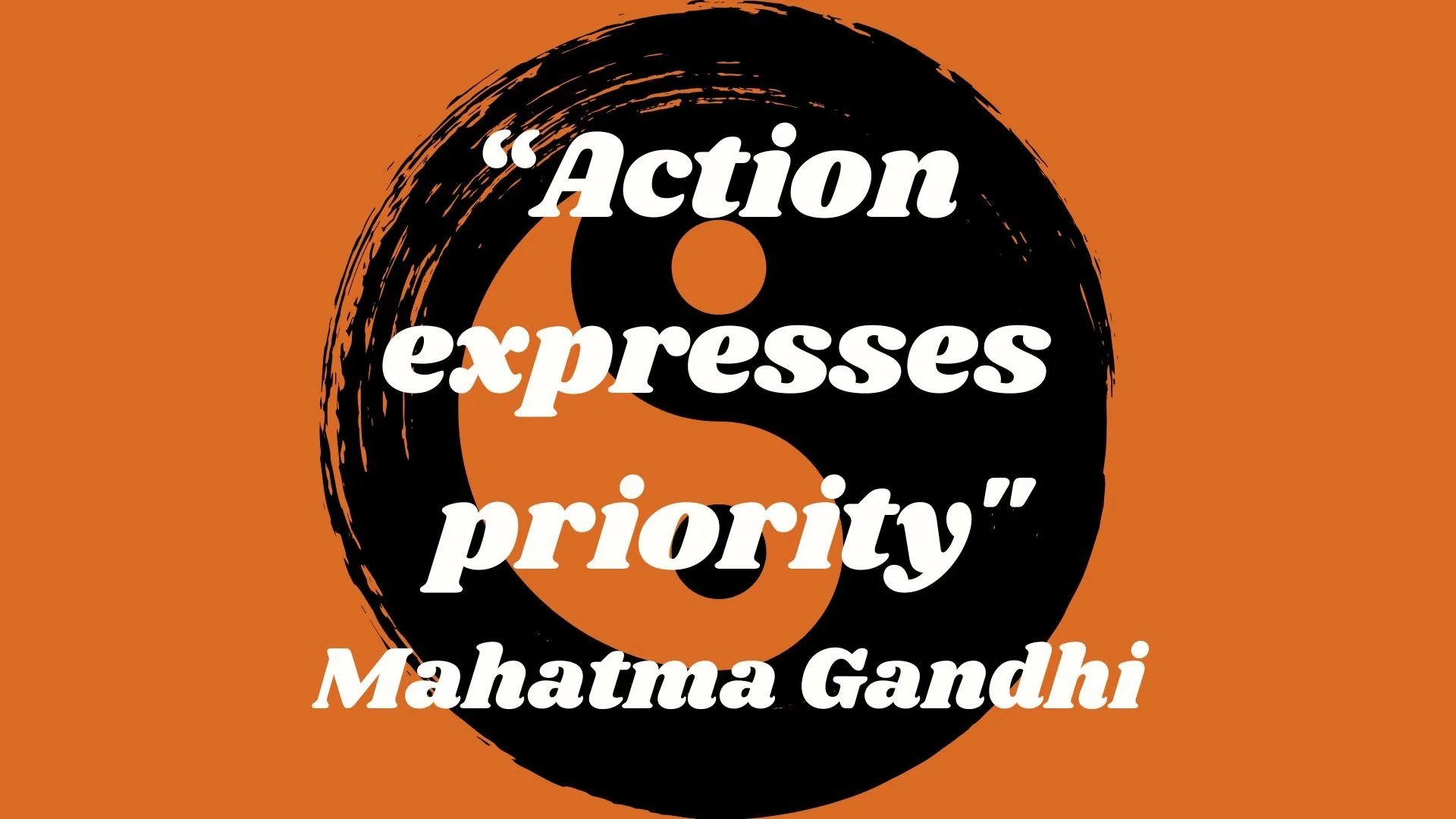
“Knowing is not enough; we must apply. Willing is not enough; we must do.”
— Johann Wolfgang von Goethe
Knowing your priorities and have considered how you want to honour them is a potentially powerful step.
For the potential to be realised though, you must act.
CONSIDER THIS:
What’s one thing you can do this week for each of the areas in your life that are important to you?
When will you do the thing?
Engage wholeheartedly Legend - This Is Your Life
Compassionate Self Leadership Part 2
Put your compassionate self leadership hat on
Having stated your hopes and dreams and you fears and concerns for each role in your life.
How would a compassionate leader approach the multidimensional life you live?
If you were coaching yourself from a place of courageous compassionate leadership how would you plan and prepare the week ahead?
Compassionate Self Leadership Part 1

"Listening is the oldest and perhaps the most powerful tool of healing.
It is often through the quality of our listening and not the wisdom of our words that we are able to effect the most profound changes in the people around us (& ourselves)."
Rachel Naomi Remen
TRY THIS: Name 3 - 5 roles you play in life that are meaningful to you.
These could be roles you have a chosen and want to be great in (like the athlete part of you or the student) or roles that you have to play as part of life (for some of us work).
For each of these roles take some time to get in touch with
What are you hopes and dreams for that area of life? What is your ideal for that particular role you play? If it were really great what would it look like?
What are your fears and concerns for these roles?
Your Environment Shapes You Will
"yes, perseverance, grit, and willpower are essential to success, but the way to improve these qualities is not by wishing you were a more disciplined person, but by creating a more disciplined environment."
James Clear.
If you can do something at the same time in the same place consistently enough when you get to that time and place you will be primed to do the thing.
This way you've built a habit but also external cues to remind you and encourage you to maintain that habit.
The key is front ending the discipline, the focus, the commitment and the consistency to do thing you set out to in the time and space you’ve chosen.
TRY THIS: Pick a habit you want to build - journaling, meditation, stretching, etc.
Where will you practice that habit?
When will you practice that habit?
How can you prepare yourself and your environment to make this happen
with as little friction as possible?
PATIENCE IS YOUR SUPER POWER
"no quality is more needed by the spiritual aspirant than patience and single-minded perseverance"
Swami Vivekananda
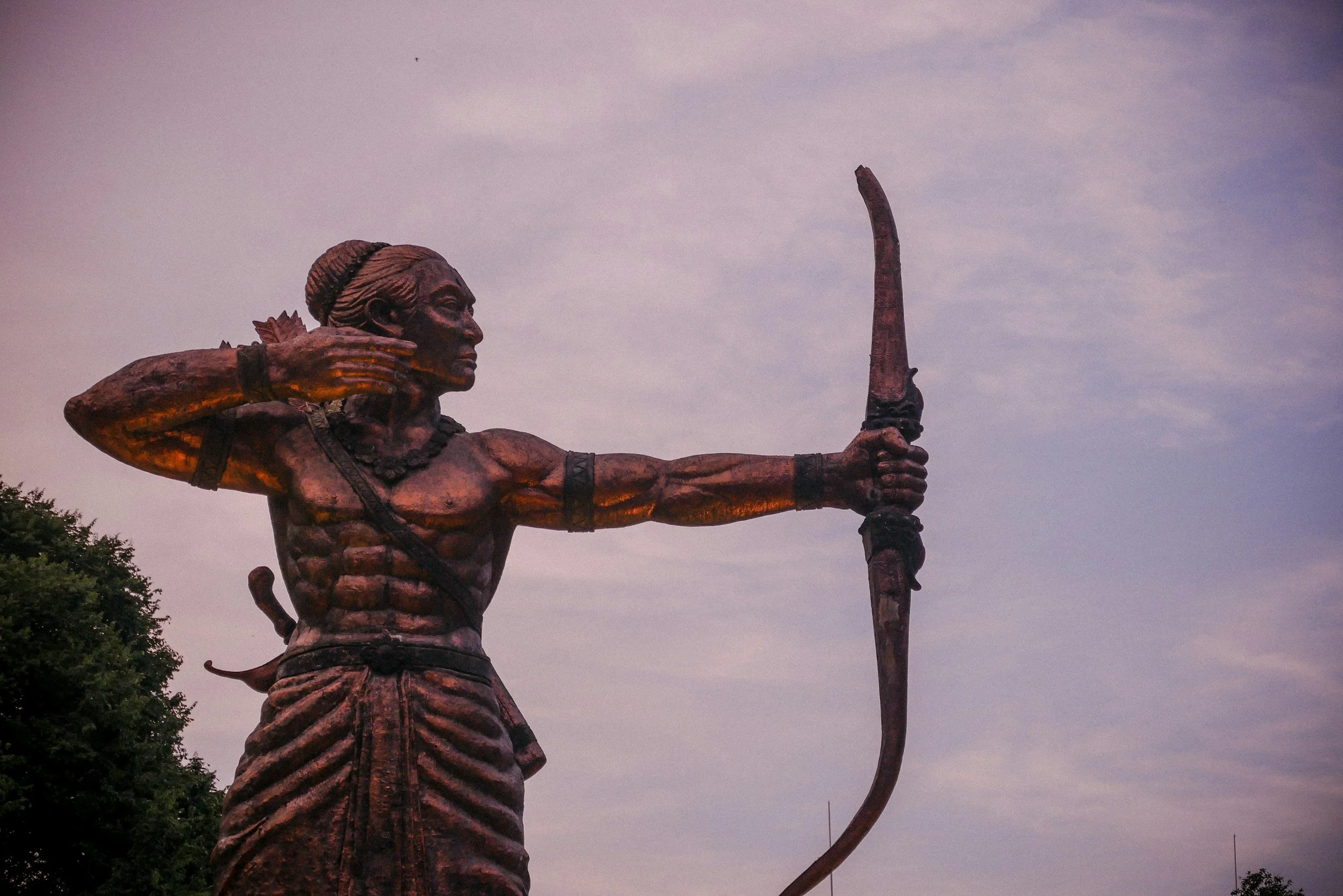
Meditation is a personal journey.
The practice itself is not a hard one.
Follow the instructions as best you can, learn and grow.
Patiently and persistently, come back to the practice, moment to moment day to day and you will be changed.
The challenges that most people face is building a habit and falling for thoughts.
Beyond both of these challenges is growth.
Building a habit is practice of discipline, autonomy and honouring you word.
Seeing through the illusion of thoughts and beliefs is a path to self discovery, personal freedom power and ultimate freedom.
TRY THIS
*Choose a time and place to train your mental fitness everyday for 3 - 15 minutes this week (choose a time you are sure you can commit to and a place you are unlikely to be disturbed that you can access easily)
*Choose something to focus on for that time - could be external like a candle or sound or internal like the breath or a word.
*Focus on that as best you can and if you notice your distracted refocus (don’t give up).
*When the timer goes on write for 1 minute about what you noticed.
Step Out of Elsewhere.
“True meditation is the fixing of the whole memory process at the present moment.”
Swami Vivekananda.

Remember to be here.
Do you know what it feels like to be elsewhere?
Worried about the future, ruminating about the past, freaking about what’s happening out there in the world.
This can be a very disempowering state.
It can lead to feelings of frustration, fear and hopelessness which can rob us of the motivation and drive to engage with what we can control so we live a lives we love.
A simple antidote to the trap of “elsewhere” is presence.
The practice of coming home to your body, your breath and the world around you.
A practice of stepping out of your mind and into a more whole way of being, a practice of re-establishing your personal power from a place of centred calmness.
TRY THIS
*Take a moment to notice where you are…… what can you notice around you? what can you hear, see, smell, taste, touch?
What are you thinking? What thoughts are running through your head right now? Just watch them and see what it’s like.
What are you feeling? Where do those feelings reside?
How’s you body feeling - from the tips of your toes to the top of your head - what do you notice?
Notice your breath…… where can you feel it. Is it deep or shallow.
How does it feel like to have take the time to do this exercise?
You Become What You Practice
“I will form good habits and become there slave.”
OG Mandino
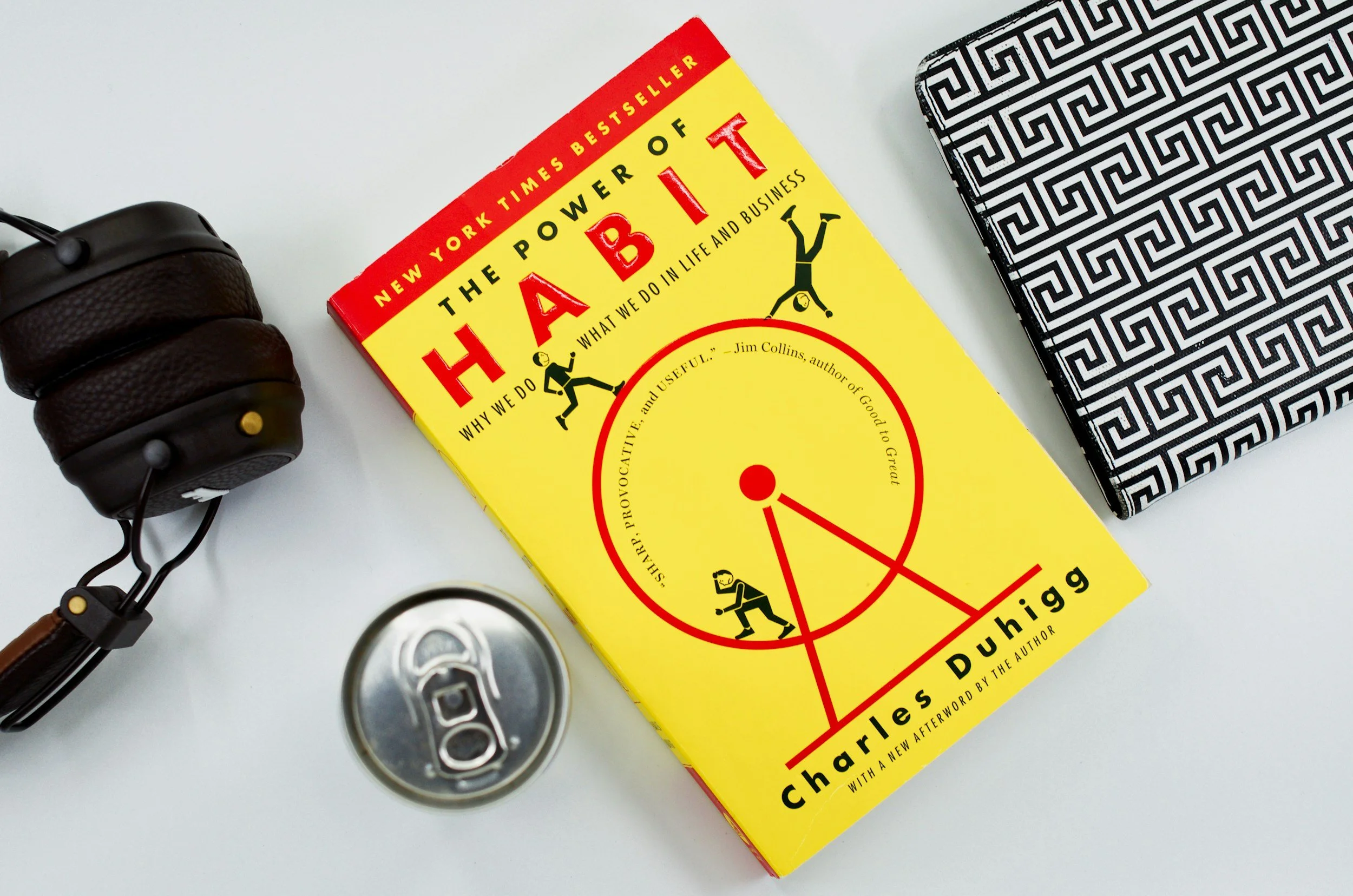
A habit is something you do so consistently, even when you don’t feel like it, that it becomes part of you.
Habits of thought shape your mind
Habits of behaviour shape your body
Habits of work shape your career
Habits of communication shape your relationships
Habits of inspiration shape your soul
CONSIDER THIS:
What’s one area of life that’s important to you?
What’s one thing you’re doing consistently that’s holding you back or keeping you stuck in that particular domain of life (bad habit)?
What’s one thing you could do consistently that would improve that area in your life (good habit)?
When will you switch the bad habit for the good?
Be More Than You Are
"When not preoccupied with our selves, we actually have a chance to expand the concept of who we are.
Loss of self-consciousness can lead to self-transcendence, to a feeling that the boundaries of our being have been pushed forward."
Mihaly Csikszentmihalyi. Flow
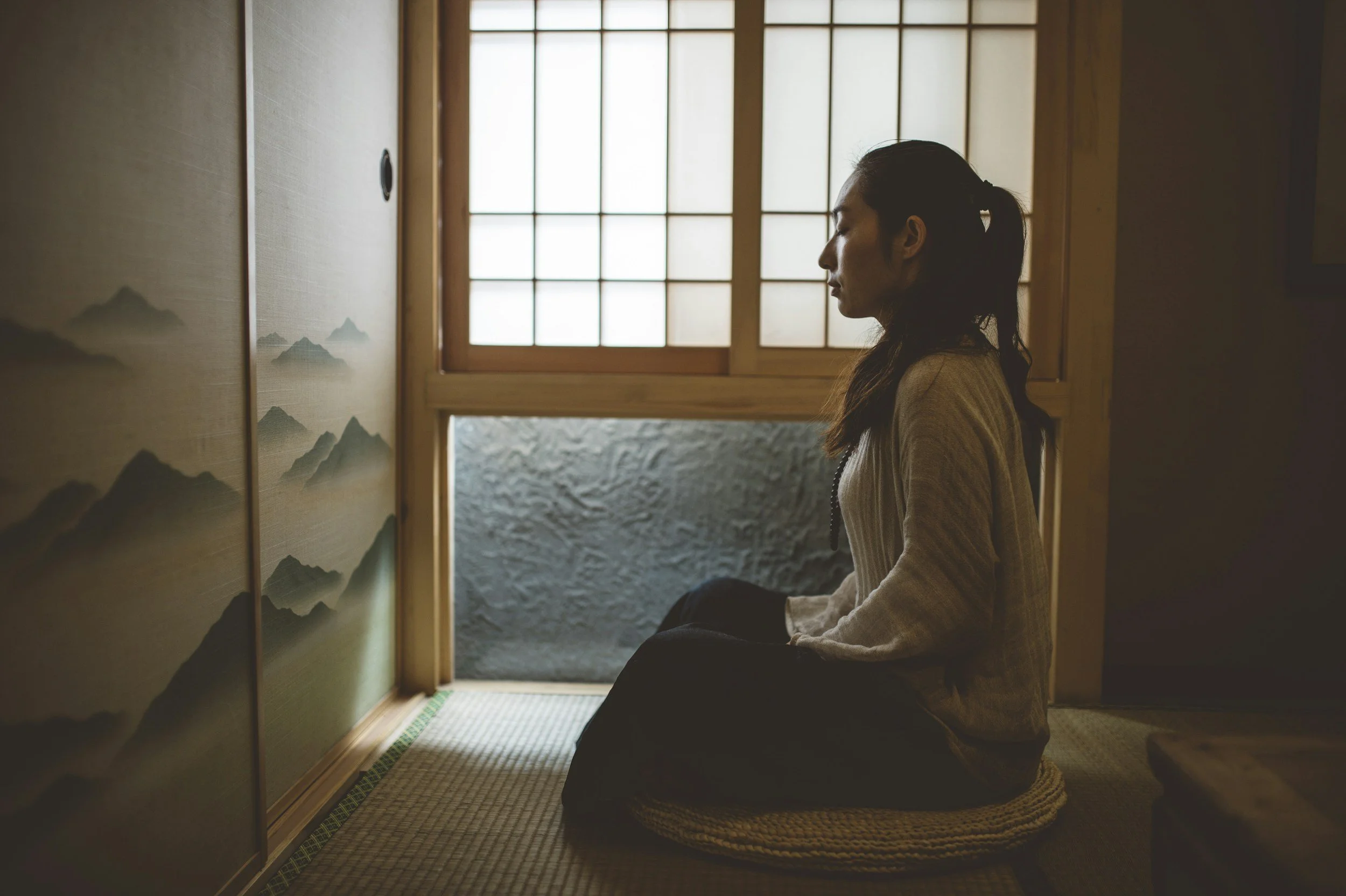
Your capacity to focus
To fully engage in the task at hand
Is a pathway to being more than who you are. A way of moving beyond self limited beliefs and the limits of a self conscious perspective and into a fuller circle of potential. This is why meditation is often called a path of transcendence.
When the task at hand is simply being and noticing your experience
You get exposed to who you think you are and to the reality that you are much more. This realization can be profoundly freeing and impact how you relate to yourself and the world. It can allow you the space to be less reactive and stuck in old patterns and more of who you want.
The jump between practice and positive change isn't immediate or guaranteed but if you're able to take lessons, insights and wisdom from your practice it will be a life long teacher.
This is why I'm launching the Art of Being Yourself.
A course using mind/body techniques to reduce stress and reactivity and increase personal power & inner peace.
In 8 weeks you will be less stressed, more inspired and have the tools to be at your best more often.
If you’re ready to be more than who you are email billy@thetigerandthemonk.com
Change Your Mind Change Your World
"When the mind changes just a little, The world quickly becomes different, too. Is this not true?"
Hung Ying-ming

When your mind changes, your world changes.
3 ways to change your mind
Get into your body -a workout, a yoga class, a walk in nature, dancing, swimming, running - getting into your body is a great way to change your state, change your perspective and change your mind
Meditate - spend 3 - 15 minutes focusing on your breath - this can have an immediate impact and if practice consistently lead to lasting change.
Listen - listen to understand, listen with your whole being, listen with curiosity, listen not just to your own thoughts about what’s being shared but listen to other points of view and ideas.